Two worlds,
one object.
SEWN.TOKYO makes one-of-a-kind daruma objects: a body cast in concrete, dressed in reclaimed black denim, closed by hand with needle and thread.
Two Worlds
One world was heavy. Factory walls, freight noise, dust that settled on everything and stayed. Beauty there was never decorative — it was structural. Things were built to hold weight, and held it.
The other world was polished. Poured-concrete facades, clean lines, clothing considered down to the seam. Beauty there was deliberate, edited, quiet on purpose.
The maker grew up in the first world and came of age in the second. Stories like this are usually told as an escape — leave one place, arrive at another. This is not that story. Both worlds are still here, carried at the same time, given the same weight. The work exists because neither was let go.
Material — Concrete
The body is cast in Jesmonite, a mineral-acrylic composite used where the presence of concrete is wanted without its burden. It takes the pour honestly: every air bubble, every faint trace of the mold remains on the surface.
We do not fill the bubbles. They are the record of one pour on one day — the reason no two bodies are alike. Concrete does not perform. It sits, it weighs, it keeps still. That stillness is the ground of the object.
Material — Denim
The denim is old. It was worn by someone — washed, faded, creased along lines drawn by a body we never met. The fade is not a finish applied in a factory. It is time, recorded in cotton.
We take these garments apart at the seams and rebuild them around the cast form: panels re-cut, belt loops and rivets kept where they earn their place. Cutting into a worn garment is a responsibility. Sewing it back into something that will outlast us is the point.
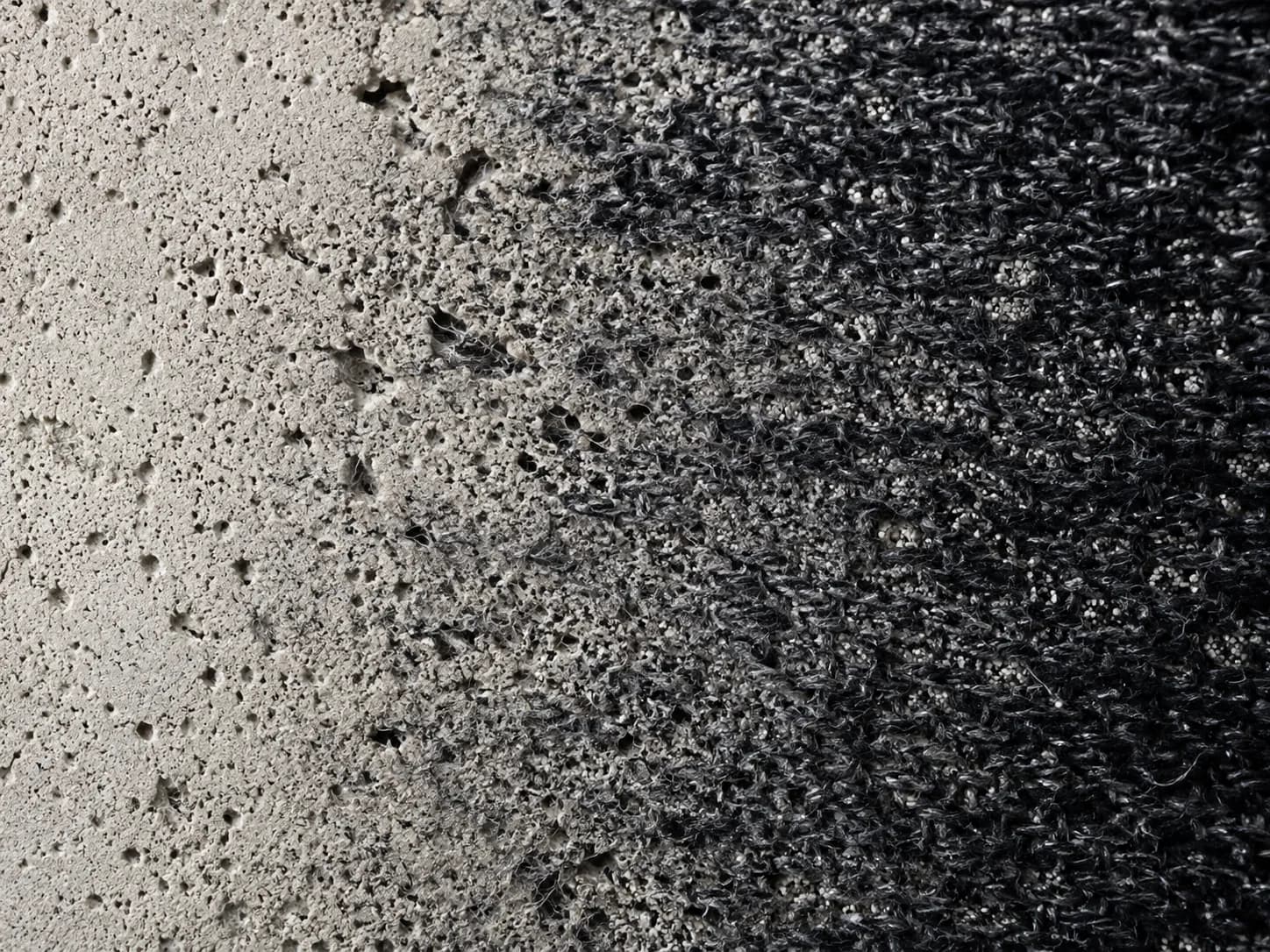
Sewn
The name is the method.
Sewn — past participle. Something already joined; the act finished, the seam remaining.
Concrete and denim have no business together. One is poured, one is woven. One is a wall, the other is worn against skin. The seam does not resolve that difference — it holds it. Not fused, not blended. Sewn: two things kept whole, made one.
That is the entire philosophy. Not division overcome, but difference held together, stitch by stitch.
The Hand
Every object is made by hand in Tokyo, one at a time. No two denim panels repeat. No two pours match. Each piece is numbered and never reproduced.
The eyes are left blank — that first mark belongs to whoever takes the object home.
The final stitch is placed by the maker.
The Maker
SEWN.TOKYO is the work of Kaito Nishimura — born in an industrial town, based in Tokyo. Every piece leaves his hands finished, except for the eyes.